
Why We Invested in Guava
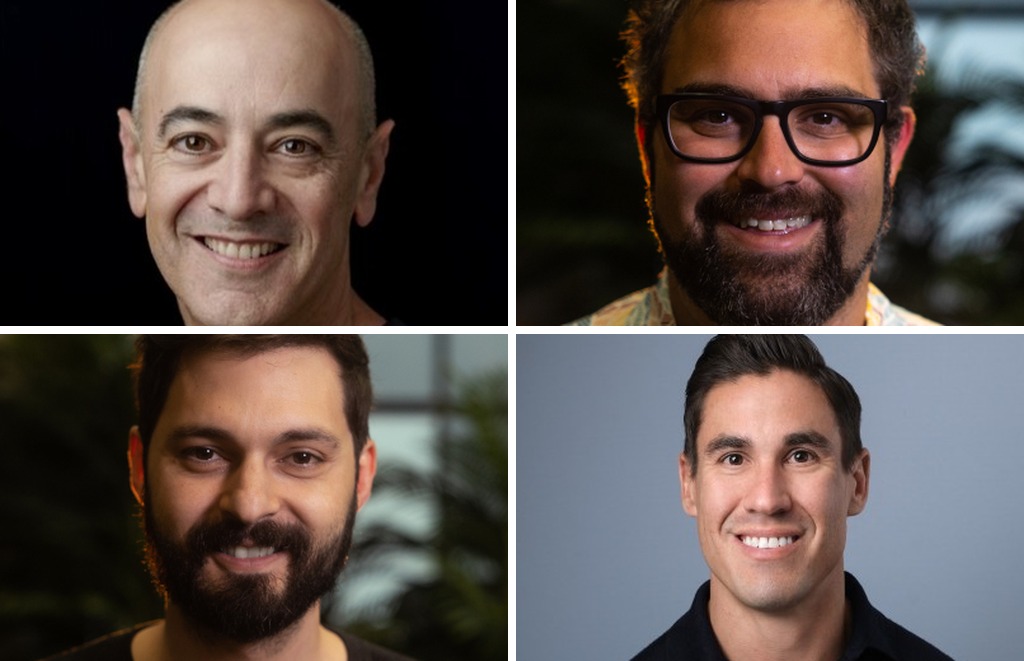
Guava Co-Founders (from top left) Omri Dahan, Anthony Scodary, Mike Piechna, Nico Benitez
At this juncture in the diffusion of AI in the everyday, most Americans have experienced conversational Voice AI, knowingly or unknowingly. For most, it falls into the first bucket, and it’s clear early on: long answer delays, limited capability to help, and frustrated users.
This frustration represents an enormous opportunity. Meticulous Research projects that the global Voice AI agents market will grow from $5.1 billion in 2026 to $43.8 billion by 2036. The winner will be the company that overcomes significant hurdles. A delayed response can cause a caller to talk over an agent or hang up. An inaccurate answer can create operational and compliance risk. Most voice systems are assembled from separate speech, language, and orchestration providers, with each layer introducing its own latency, failure modes, and review requirements.
These demands are especially true in regulated industries where a voice agent needs to hear correctly, respond quickly, follow the rules, and leave behind a record that an institution can trust.
Guava is building for calls where the answer has to be right. Its code-first voice platform brings speech recognition, language-model reasoning, speech synthesis, dialog control, and compliance into one runtime. Developers can use Guava to build and deploy production voice agents for workflows such as healthcare intake, insurance claims, bank know your customer (KYC), collections, and member services.
We’re excited to participate in Guava’s $12.5 million seed round, led by Acrew Capital, alongside Commerce Ventures and other investors. The Los Angeles-based company’s approach aligns closely with how we think about financial systems change. The institutions that serve people every day—banks, insurers, lenders, healthcare providers, and the businesses that support them—need better infrastructure to handle more demand without sacrificing trust. By making voice automation more reliable, controllable, and compatible with regulated workflows, Guava has the opportunity to improve how these institutions operate and how their customers experience them.
We’re excited about the possibilities and our partnership with co-founders Omri Dahan, Anthony Scodary, Nico Benitez, Mike Piechna, and the rest of the Guava team.
From speech research to regulated production
Guava’s founding team brings together deep technical experience in speech and infrastructure with the commercial expertise required to bring a complex platform into large, regulated organizations.
Anthony previously worked at NASA’s Jet Propulsion Laboratory on missions to Mars and Jupiter before co-founding Gridspace. Nico, who studied computer science at Stanford, brings experience in streaming media, distributed computing, and natural-language processing. Together, they built Guava’s platform on over a decade of foundation model development by Gridspace, a frontier voice lab that trained its models on over 10 billion minutes of live conversations in regulated call centers.
Omri joined as the leader who can scale the business to its potential. He previously served as Marqeta’s Chief Revenue Officer, building the payments company from its first dollar of revenue through its IPO. He knows what it takes to deploy technologies in the most trust-sensitive industries.
“I had been an investor in Gridspace, so I knew the team and the technology,” Omri says. “A frontier voice lab with a full team of top ML engineers, in a market as big as voice, is rare. This team is uniquely qualified to deliver state-of-the-art voice. At Marqeta, I witnessed firsthand what it takes to ensure reliability at scale in regulated environments and to take real accountability for performance. As I learned more about the team, the tech, and the market, I started to feel that addictive feeling I’ve had only a few times in my career. It said: I have to do this.”
Guava built its platform on over a decade of foundation model development by Gridspace, a frontier voice lab that trained its models on over 10 billion minutes of live conversations in regulated call centers. Guava customers can move from kickoff to a live call in as little as 14 days. The company is showing rapid growth with multi-year contracts structured around committed conversation volume. Guava’s first public model, Daytona, launched in September. It scored first in a recent Coval word error rate benchmark and is already supporting over a dozen enterprise customers while powering tens of thousands of calls per day.
A voice stack built for calls that have to be right
Guava gives developers the tools to build voice agents in code rather than relying only on prompts or visual conversation flows. A team can connect the agent to its systems, define the logic that governs a call, test changes, and deploy to real telephony.
“Most voice AI sounds good in a demo and breaks down on real calls,” Omri says. “Guava builds and runs its own speech recognition, language models and speech synthesis as a single stack, so one team is accountable for the whole call. Developers control what the agent does with code and business rules instead of prompts, and we take full accountability for the quality of the voice experience. I love being the team that says ‘the buck stops with us.’”
The company’s core bet is that an integrated stack creates a better foundation for regulated use cases. Running speech recognition, language models and speech synthesis as a single stack allows the company to optimize the path from listening to reasoning to speaking, while giving developers more control over the behavior of the agent.
This workflow is vital for exchanges beyond simple question-and-answer ones. A healthcare intake agent may need to collect information in a prescribed order. An insurance agent may need to capture the facts of a claim without making an unauthorized promise. A bank or lender may need to verify identity before discussing an account. Guava’s platform encodes rules directly into the system and makes them versioned, tested, and reviewable.
Building the next layer of regulated voice infrastructure
Guava will use the fresh capital to support continued model and product development, and kick-start the company’s go-to-market team serving enterprises and business process outsourcers. If Guava can make it easier for regulated institutions to build voice agents that behave reliably under real-world constraints, it can help voice AI become dependable infrastructure.
We believe Omri, Anthony, Nico, and Mike are building the team to succeed in this endeavor, while creating the kind of systems change we are excited to support.